Skin concerns · London

Jowls and a Sagging Jawline

Four things can soften a jawline, and each has its own fix. A short assessment at Wimpole Street tells you which is yours, so the first treatment you choose is the one that works.

At a glance

  • Causes Volume loss, ligament laxity, skin thinning, fat descent
  • Treated at Wimpole Street, London
  • Typical course 1 to 3 sessions by treatment
  • Downtime None to 3 days
  • First step Consultation and facial assessment

What it is and why it happens

A jowl is the soft tissue that has slipped below the jawline. Most people notice it in a photograph taken from slightly below, or on a video call. The clean edge from ear to chin has blurred. Cheek volume, ligament support, skin quality and a small fat pad each play a part, in different proportions in different faces, and the London clinic has a treatment for each: Morpheus8, Ultraformer HIFU, Endolift, structural filler. Where surgery would serve you better, your clinician says so at the consultation and points you to the right door.

Volume loss in the mid face is the most under-recognised. When the cheek deflates, the tissue that was resting on it drops toward the jaw. The jowl is the visible end of a change that started higher up, which is why restoring the cheek so often lifts the jaw too.

Regents Park Aesthetics assesses which of the four is driving yours before recommending anything, at the Wimpole Street clinic in the heart of the Harley Street medical district.

Loss of definition through the lower face and jaw
Know your type

Which type is yours?

Early jowling

Softening edge, skin still firm

Early jowling

The jawline has lost its crispness but nothing is hanging yet, and it shows in photographs before it shows in the mirror. This stage responds best and needs least, so a little care now keeps the edge crisp for years.

Volume-driven jowls

Flat cheeks, tissue pooling at the jaw

Volume-driven jowls

The mid face has deflated and the tissue that sat on it has slid downward. Look at a photograph from ten years ago: if the cheeks were fuller then, this is your cause. Restoring the cheek lifts the jaw from above, right where the change began.

Skin-quality jowls

Crepey, thin, finely lined skin

Skin-quality jowls

The skin itself has thinned and lost elasticity, so it no longer holds against the tissue behind it. Common after significant weight loss and in sun-damaged skin. This is where skin-quality treatments shine, firming the skin so it holds its shape again.

Heavy jowls

Pronounced, with a defined jowl pouch

Heavy jowls

Established descent with real weight to it, often alongside submental fullness under the chin. Non-surgical treatment brings a visible improvement here, and your consultation sets out exactly how much change to expect before you begin.

How we assess and treat

Assessment at Regents Park Aesthetics is done sitting upright, because lying a patient back lifts the tissue and hides the exact thing being assessed. Your clinician looks at the jawline at rest and animated, then presses to judge skin thickness and elasticity. They check mid-face volume against the jawline. A photograph of you from ten to fifteen years ago completes the picture.

That old photograph is the most useful diagnostic in the room. It shows whether your cheeks have deflated, which decides whether this is a volume problem dressed up as a sagging one.

Non-surgical treatment gives heavy, established jowls a meaningful improvement. If you would like the jawline fully restored, a surgeon is the right next step, and your clinician will point you to one at the consultation so your time and budget go where they count.

Clinic brochure and skincare products on a treatment room counter
Your options

Which treatment for your type of jowl?

As a guide, this is how we typically match each type to a treatment. Your own plan is always confirmed at consultation, and where a surgeon would serve you better, your clinician refers you.

Type
Recommended treatment
Why
Early jowling
Focused ultrasound lifts the layer surgeons tighten, and early responds best
Volume-driven jowls
Restoring the cheek removes the mechanism instead of chasing the symptom
Skin-quality jowls
Thin, crepey skin is where skin-quality treatment shines
Heavy jowls
A visible improvement, with expectations set at consultation

Treatments that address it

Ultraformer III HIFU The closest non-surgical treatment to an actual lift. Focused ultrasound is delivered at fixed depths down to the SMAS, the same tissue layer a surgeon tightens in a facelift, caus Morpheus8 Radiofrequency to 4mm, which reaches both the deep dermis and the fat layer beneath. It tightens and improves skin quality at the same time, and it can reduce a small amount of fat Dermal Fillers The answer for volume-driven jowling, and the treatment most often skipped. Restoring mid-face and jawline support lifts the tissue from above rather than pulling at the jowl. Imme Profhilo For the skin over a jowl, adding hydration and bounce. Where thin crepey skin is part of the picture it improves
Morpheus8 handpiece applied to the face during treatment Practitioner injecting filler into the lips with a fine needle Profhilo product boxes laid out on a white surface
£450 £500 £350 £320
Early to moderate laxity Skin quality plus contour Volume-driven jowling Skin quality only
Focused ultrasound to the SMAS RF microneedling to 4mm Restores mid-face support Hydrates and stimulates collagen
Yes, genuinely Yes, moderately Yes, indirectly No
1, repeated annually 3, four weeks apart 1, topped up 12 to 18 months 2, four weeks apart
None 2 to 3 days 24 to 48 hours None
3 months 3 to 6 months Immediate 6 weeks

Before and after

Side view of the lower face before Morpheus8, with a soft jawline and loose skin under the chin
Before
Side view of the same lower face after four Morpheus8 treatments, with a firmer jawline
After
Jawline and neck
Side view, after Morpheus8

Definition returning along the jaw and upper neck. Clinical image supplied by InMode. Individual results may vary.

Profile of the jaw and chin before Morpheus8, with fullness under the jaw
Before
Profile of the same jaw and chin after Morpheus8, with a cleaner jaw contour
After
Jaw and chin
Profile, after Morpheus8

The same treatment seen in profile. Clinical image supplied by InMode. Individual results may vary.

Three quarter view of a jawline before EmFace, with a soft, undefined border along the jaw
Before
The same jawline after four EmFace treatments, with a cleaner border and less fullness beneath
After
Jawline
After a course of EmFace

Muscle and skin treated together without needles. Clinical image supplied by BTL. Individual results may vary.

Can you treat it at home?

Facial exercises, jaw-toning devices and the gadgets sold for this all work on muscle, and muscle is not the structure that has changed, so the lift has to come from elsewhere. Strengthening the wrong muscle can even make the lower face look heavier. Facial massage is lovely for circulation and morning puffiness, and worth keeping for that.

What does help at home works slowly and steadily over years. Daily SPF prevents the collagen breakdown that thins skin. A retinoid used consistently over years measurably improves skin thickness. Not smoking matters more than any product. Avoiding repeated significant weight loss and regain protects the mid-face volume that holds everything up.

Two things are worth knowing. Creams and serums work on the skin, while the ligaments and fat pads sit deeper, which is where the clinic treatments come in. And weight loss, including on the current weight-loss medications, often deepens jowling by removing mid-face volume. Patients often arrive at Wimpole Street having lost several stone and keen for their face to catch up with how well they feel.

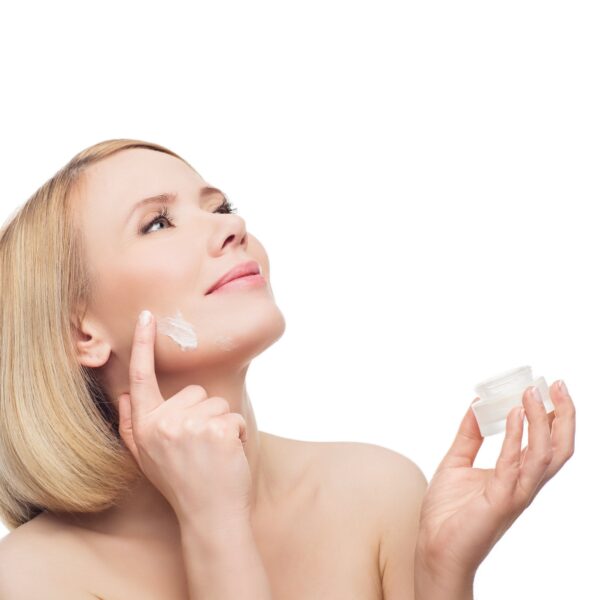
Moisturiser being smoothed along the jawline and neck
Questions, answered

Frequently Asked Questions

The soft tissue that has descended below the jawline, breaking the clean edge that once ran from ear to chin. They are made of skin, fat and connective tissue that has slipped, not simply loose skin.

Four things, usually together: mid-face volume loss, laxity in the retaining ligaments, thinning of the skin itself, and downward descent of the facial fat pads. Genetics sets the timing, and sun exposure, smoking and repeated weight fluctuation accelerate all four.

It depends entirely on which cause dominates. Volume-driven jowling responds to filler restoring mid-face support. Laxity responds to Ultraformer HIFU or Morpheus8. Poor skin quality needs skin treatments. Matching the treatment to the cause is what makes the result show.

Ultraformer HIFU comes closest, because it treats the SMAS layer a surgeon tightens. Morpheus8 works well where skin quality is also poor. Filler addresses volume-driven jowling. Expect a meaningful, natural-looking improvement, with a facelift remaining the route to a full restoration.

Focused ultrasound and radiofrequency microneedling both genuinely tighten. Filler along the jawline sharpens the edge and can camouflage a mild jowl. Which combination suits you depends on skin thickness and how much volume you have lost.

In specific cases, as a finishing touch. A Nefertiti lift places small amounts along the jawline and upper neck to release the downward pull of the platysma, which sharpens the jaw edge slightly. It is a refinement that pairs beautifully with treatments that lift the jowl itself.

In a few faces it can, which is why it is planned with care. Reducing masseter bulk in a face that has already lost mid-face volume removes support from the lower face and can make jowling more obvious. It is uncommon and it is predictable, which is why we assess mid-face volume before treating a masseter.

Daily SPF, a retinoid used consistently, not smoking, and avoiding repeated large weight swings. Starting skin-quality treatment in your late thirties keeps the skin thicker for longer. Together they slow the process down.

Daily SPF, a consistent retinoid and a steady weight keep the skin and mid face in good shape over years. Facial exercises and jaw devices do not lift descended tissue, and can make the lower face heavier by building the wrong muscle. Massage helps puffiness temporarily.

They tone muscle, while the structures that change are ligaments, fat pads and skin, none of which are trainable. There is no good evidence that facial exercise lifts a jowl, and some evidence that overworking the lower face worsens the look.

Early signs typically appear in the late thirties to mid forties, becoming more pronounced through the fifties. Genetics and sun exposure move that by a decade in either direction.

Often it does the opposite. Weight loss removes mid-face volume as well as body fat, which takes away the support holding the lower face up. Patients frequently arrive here having lost a significant amount of weight and keen to bring back the fullness their face has lost.

From £450 for Ultraformer HIFU, £500 for Morpheus8, £350 for filler and £320 for Profhilo. Most plans combine two approaches, so we quote the plan rather than a single session.

Ultraformer HIFU around twelve to eighteen months, Morpheus8 twelve to eighteen, filler twelve to eighteen depending on product and placement. Ageing continues underneath all of it, so these are maintenance treatments rather than one-off fixes.

When the jowl is heavy and established, when there is significant excess skin, or when you want the jawline restored rather than improved. Your clinician talks this through at the consultation and points you to the right surgeon, so your time and budget go where they count.

Visit our Wimpole Street clinic

Let’s talk about your skin.

A consultation is the first step towards a plan that feels right for you.

Address19 Wimpole Street, London W1G 8GE
Telephone020 7580 4813