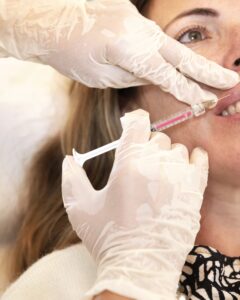
You can love a concealer and still wish you needed less of it, especially under the bright lights of a changing room or on a morning video call. The shadow beneath an eye is a fascinating puzzle, because each cause has its own treatment. Tear trough filler softens a hollow that casts a shadow, and that can be a lovely change. Dark circles have several possible causes, and puffiness calls for a different approach.
That is what makes a good consultation so worthwhile. Before asking how much filler you need, ask what is creating the effect you would like to change. The answer may open up an exciting option, or point you towards something that suits your concern far better.
Is it a hollow, a colour change or a bag?
These can look surprisingly similar in a photograph. A groove between the lower eyelid and cheek can create shadow, and skin colour, visible underlying structures and protruding tissue can all contribute to the look of dark circles. Often more than one factor is involved. A clinical framework for assessing the under-eye area reflects that complexity.
Filler adds volume, which is why it suits a genuine hollow better than an area that is already puffy. If your main concern is brown pigmentation, the conversation turns to pigmentation, and if it is a prominent bag, a different treatment is the better route.
Try describing what bothers you without choosing a diagnosis: “There is a shadow here even when I feel well” or “This area looks swollen in the morning”. Bring that observation to an assessment. You do not need to be an expert in eyelid anatomy to explain the result you would love.
Who is a good candidate?
A clinician may consider tear trough filler when a hollow is a significant part of the concern and the surrounding tissues are suitable. They will look at the eyelid and cheek together, rather than treating the groove as an isolated line to fill. Published tear trough treatment research concerns carefully selected patients, which is exactly why your assessment matters.
This is where the appointment becomes personal. Share any previous filler, previous surgery, swelling, medical conditions and other procedures around the eyes. If you are unsure which product you had before, your earlier provider can share your treatment record.
Talk about the scale of change you would be happy with, too. A gentle softening of a hollow is a lovely goal, and a normal, moving face will always keep a little natural shadow in some lights.
Matching the treatment to the cause
If the main issue is bags, significant skin laxity or pigmentation, a different treatment reaches the feature you would like to change. A photograph of someone else’s improvement is a lovely guide, and your own tissues have their own story.
That is why the plan starts with the right treatment rather than the smallest amount, and even a subtle procedure comes with a full explanation at the consultation.
Ask your clinician to separate what they expect to improve from what they expect to stay the same. That simple distinction is far more useful than a general promise to look refreshed, and it lets you weigh the cost and recovery with confidence.
Getting the most from before-and-after photographs
Photographs can be a great starting point. Ask whether an example shows the same concern as yours and how long after treatment the second photograph was taken, because a hollow treated on its own says little about protruding bags. Check whether other procedures were involved too.
Look for comparable lighting, head position and expression, since brighter lighting can soften a shadow without any change underneath. With clear context, photographs illustrate real outcomes, and they are best used as a prompt for good questions rather than a result to order.
How much does it cost at RPA London?
Our London tear trough treatment price is £520 for the listed 1ml option. It is a menu option rather than advice that every person or every eye needs that amount, and your clinician will explain the proposed product, plan and total cost before you decide.
Ask whether the quoted plan includes a review and how things work if you decide to take more time. The clinic’s terms explain consultation and booking conditions, and a review is there to check how you have settled rather than to add more filler.
It is also sensible to compare the cost with the change you would like. Knowing the likely improvement before treatment lets you decide whether it feels worthwhile, and a thoughtful consultation helps you make that decision calmly.
Why experience matters so much around the eyes
The under-eye area deserves careful assessment and a clear plan. At RPA, injectable treatments are performed by medical professionals. Ask about your practitioner’s experience with tear trough assessment, how they choose the right treatment for each face and how aftercare is arranged.
You leave with written aftercare and a direct line to the clinic, so you can relax and enjoy the days that follow.
When another option shines
Start with the cause, then explore the options. Pigmentation, a skin condition and a structural eyelid concern can each call for different advice, sometimes outside a cosmetic appointment. A surgical opinion can suit some eyelid concerns, and where that is the better route your clinician says so at the consultation and points you to the right door.
If your wider wish is fresher-feeling skin, a HydraFacial is a lovely appointment to discuss. It works on the skin’s surface rather than filling a hollow or removing a bag, so it is a different treatment rather than a cheaper version of the same result.
You can also choose skincare or make-up and leave the structure alone; there is never an obligation to treat a feature simply because a procedure exists. Sometimes the most valuable outcome of a consultation is a clear explanation of what would genuinely help.
For an assessment at our London clinic, contact RPA at 19 Wimpole Street, in the Harley Street medical district, or call 020 7580 4813. Bring your main question, details of any earlier treatment and an open mind. You deserve advice that begins with your eyes, rather than a syringe size.
Your questions, answered
A selfie is a helpful way to show your concern, but lighting, angle and expression can change how a hollow or bag looks. An in-person assessment of the tissues and your medical history gives you the real answer.
Crow’s feet and a tear trough hollow are different concerns. Mention both at your consultation if they matter to you, and you can discuss the right approach for each.
Ask before booking. Your practitioner will decide whether each treatment suits you and how to space them so both work beautifully.
The menu option describes a product volume, and your personal plan is made at the consultation. Ask your clinician to explain the total product planned and how it relates to your anatomy.
Share your previous treatment details, including the product and date if you have them. If a shadow has returned, an assessment comes first, because swelling, remaining product or another cause may be involved.