





Skin
Skin Tags, Moles & Warts
Tags that catch on collars, and warts that have outstayed months of pharmacy treatment.
Explore skin
Care starts with your skin, not a treatment name.
Explore injectables
A medical consultation and an individual approach.
Explore face & body
Explore options for contour, muscle and firmness.
Explore concerns
You do not need to know the treatment. Tell us your concern.

Explore skin
Care starts with your skin, not a treatment name.
Explore injectables
A medical consultation and an individual approach.
Explore face & body
Explore options for contour, muscle and firmness.
Explore concerns
You do not need to know the treatment. Tell us your concern.

Assessed first, then removed
The skin tag that catches on every necklace, the wart that has outstayed its welcome: often treated in a single appointment on Wimpole Street. A clinician assesses every lesion first, then a precise plasma pen removes it with no cutting and no stitches.
per treatment
You see it every morning in the mirror, and often a single appointment changes that. The same plasma technology used for non-surgical blepharoplasty is applied to lesions. A fine probe is held just above the skin without touching it, and the arc sublimates the lesion tissue, turning it directly to vapour. Nothing is cut and nothing is stitched, which keeps marking to a minimum.
Skin
Tags that catch on collars, and warts that have outstayed months of pharmacy treatment.

Skin
Milia are keratin cysts, which is why plasma clears them so neatly.

Skin
The small red spots that multiply through your forties, removed in seconds each.
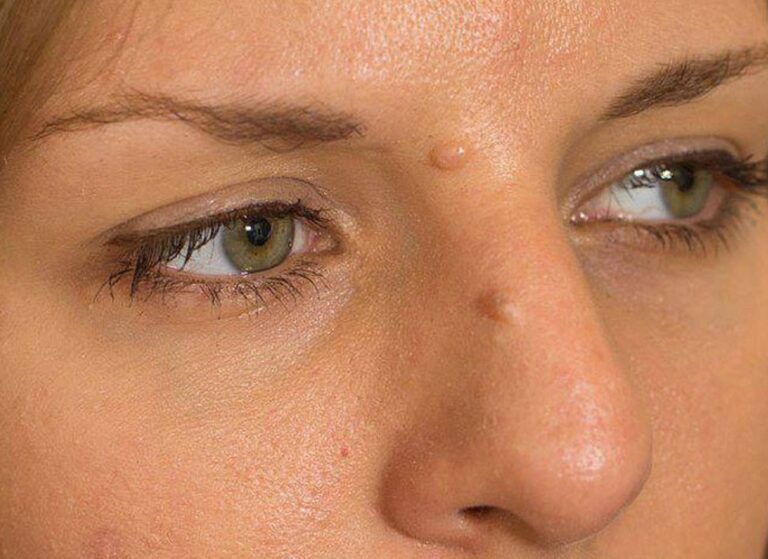

A small raised lesion removed with Plexr plasma. Image courtesy of GMV, maker of Plexr. Individual results may vary.
Every lesion is assessed by a clinician first.
Any mole that deserves a closer look goes straight to a dermatologist, so every removal here is a confident one.
Skin tags catching on collars and necklaces, milia along the cheekbone, cherry angiomas, warts and verrucas. Every lesion is assessed by a clinician first.

Plasma removes tissue with precision measured in fractions of a millimetre, which is what makes it well suited to small lesions on the eyelid and around the eye.
Milia along the cheekbone, cleared neatly at last.

Skin tags catching on collars and necklaces. Once removed they rarely return to that spot, though new ones can appear elsewhere.
Warts that have outstayed months of pharmacy treatment. Warts are viral, so recurrence is possible, and larger ones occasionally need a second session.
Topical anaesthetic for around thirty minutes, then seconds per lesion. Small dark crusts for seven to ten days, pink new skin fading over weeks two to six. Most lesions are removed in a single session.
A clinician examines each lesion. Any mole that deserves a closer look goes straight to a dermatologist, so every removal here is a confident one.
What you feel or see A careful look at each lesion.
What to do Point out anything that has changed recently.
A clinician examines each lesion. Any mole that deserves a closer look goes straight to a dermatologist, so every removal here is a confident one.
What you feel or see A careful look at each lesion.
What to do Point out anything that has changed recently.
Topical anaesthetic for around thirty minutes, or local injection for larger lesions. Treatment takes thirty to sixty minutes depending on number; each lesion takes seconds.
What you feel or see Heat and a brief sharp sensation at each point.
What to do Most lesions are removed in a single session.
Small dark crusts sit where the lesions were. The surrounding tissue is left intact, which is why healing is fast and marks are uncommon.
What you feel or see Dry, dark dots that gradually lift.
What to do Keep them dry and let them flake off on their own, which gives the cleanest finish.
Pink new skin fades gradually to normal tone. Temporary pink or pale marks are normal for several weeks.
What you feel or see Pink, then your normal skin tone.
What to do Mineral SPF on any treated area that sees daylight.
Most lesions are removed in a single session. Larger or deeper warts occasionally need a second, which is quoted at review rather than assumed. Skin tags rarely return to the spot where they were removed, new ones can appear elsewhere, and warts are viral so recurrence is possible.
What you feel or see Clear skin where the lesion was.
What to do Come back for review if a wart persists.
A clinician examines each lesion. Any mole that deserves a closer look goes straight to a dermatologist, so every removal here is a confident one.
Topical anaesthetic for around thirty minutes, or local injection for larger lesions. Treatment takes thirty to sixty minutes depending on number; each lesion takes seconds.
Small dark crusts sit where the lesions were. The surrounding tissue is left intact, which is why healing is fast and marks are uncommon.
Pink new skin fades gradually to normal tone. Temporary pink or pale marks are normal for several weeks.
Most lesions are removed in a single session. Larger or deeper warts occasionally need a second, which is quoted at review rather than assumed. Skin tags rarely return to the spot where they were removed, new ones can appear elsewhere, and warts are viral so recurrence is possible.
Let the crusts lift on their own for the cleanest finish.
Small crusts flake off over a week to ten days, and pink new skin fades gradually to normal tone.
Every patient is assessed by a qualified clinician, a doctor, nurse or other qualified practitioner, before anything is booked.

Lead Practitioner
Award-winning aesthetic nurse practitioner with more than twenty years of specialist NHS nursing and over a decade in advanced aesthetic medicine. Qualified independent prescriber and the clinic’s CQC registered manager.

Doctor
MBChB, BSc (Hons), with First-Class degrees in Physiological Sciences and in Medicine and Surgery, and extensive NHS experience across medical and surgical specialties. Trained with DermaMedical.
The right choice depends on your skin and what you are treating; a consultation settles it.
| Treated herePlasma pen, usually one session | Referred to a dermatologistNot treated | |
|---|---|---|
| Lesions | Skin tags, warts, verrucas, milia, cherry angiomas and benign moles | Anything changing, asymmetric, irregularly bordered, itching, bleeding or new in adulthood |
| First step | Clinician assessment | Clinician assessment |
| See pricing |
Moles are removed only when benign, and only after clinician assessment.
Appointment30 to 60 minutes
SessionsUsually one
DowntimeSmall crusts for 7 to 10 days
Your plan and the number of sessions are agreed at your consultation, before anything is booked.
£180 for one to three, £220 for four to six, £260 for seven to ten, rising to £340 for fourteen to eighteen. Priced by number so several can be done in one appointment.
Skin tags catching on collars and necklaces. Warts that have outstayed months of pharmacy treatment. Milia along the cheekbone, cleared neatly at last. Cherry angiomas that have multiplied through your forties.
All are benign, and people remove them because they catch, they irritate, or they have simply had enough of them. Every lesion is assessed by a clinician first, so each removal is planned with care.
Topical anaesthetic is applied for thirty minutes, or a local injection for larger lesions. Each lesion takes seconds and most patients feel a brief warmth.
Beautifully in most cases, and marks are uncommon because nothing is cut. Small crusts flake off over a week to ten days and the site is pink for several weeks. Letting the crusts lift on their own gives the cleanest finish.
Rarely from the spot where they were removed. New ones can appear elsewhere, since the tendency to form them is constitutional, and they are just as quick to treat.
Benign ones, after clinician assessment. Any mole that deserves a closer look is referred to a dermatologist, so every removal at Wimpole Street is a confident one.
Yes. Warts are viral, so recurrence is possible and a second session is occasionally needed.
Yes, and plasma is well suited to it. Milia are keratin cysts, so plasma lifts them away far more neatly than a facial or extraction could.
Up to eighteen at the top price band, and more can be split across sessions.
It can, after a skin check. Darker skin can show temporary pigment change at the treated site, and careful sun protection during healing keeps it to a minimum.
Crusts flake by day seven to ten. Pinkness fades over several weeks. Mineral SPF on any treated area that sees daylight.
Every plan starts with a conversation and a close look at your skin, so the treatment you book is the one that suits you.
Tell us what you’d like to achieve. Regents Park Aesthetics will be in touch within one working day to arrange your consultation.
